You’ve probably noticed how curious your cat is by now, they always want to know what you are doing in the kitchen, and most importantly: What you are eating! Maybe as a side for beef, included in a soup or a salad, you’ve been using asparagus and wonder: Can cats eat asparagus? And most importantly: Is it safe for my cat to eat asparagus? Luckily, the answer is yes to both questions! Cats can safely eat asparagus in small servings, if prepared properly.
This post contains affiliate links. As an Amazon Associate, I may earn commissions from qualifying purchases.

Understanding Your Cat’s Dietary Needs
Before discussing any potential benefits and how to give asparagus to your cat, it´s important to know what the ideal balanced diet for them should consist of.
It may not come as a surprise, but cats don’t benefit much from eating plants and vegetables. In fact, cats are obligate carnivores.
What does this mean? In short, they get the most nutrients and benefits from meat and meat-based proteins.
Their natural tendency to meat-based diets is due to easier digestion than when opting for eating plants and vegetables, as well as their low nutritional profile in comparison with meat-based meal options. This is why most dry and wet commercial foods consist mostly of meat products.
In addition, the ideal cat diet should consist of around 50% protein, 40% fat, and no more than 10% carbohydrates. To reach these values, it’s important to understand how crucial it is for our feline friends to get their nutrients from a meat-based diet since plants won’t provide enough protein, nor fat, but in most cases hard-to-digest carbohydrates.
Even if your cat eats what for us humans is a very nutritional vegetable like asparagus, they won’t be able to process all of those nutrients, as their digestive system is not adapted to doing so. Despite this, asparagus in small amounts is not harmful to cats and can even provide some potential benefits as we will see in a bit.
Is Asparagus Good For Cats?
Asparagus joins the list of not only safe, but good vegetables for your cat! Although not as great as zucchini for example, it still enjoys some shared benefits with it:
- High fiber content: Asparagus is rich in fiber, which cats need a lot of, and can sometimes be hard to find on a regular diet, so a little bit more is never bad! Fiber can help your cat with the digestion process, contributing to a healthy digestive system. This also helps with keeping hairballs away!
- Low calories: If your furry friend is currently on a diet, you’d probably be happy to hear that asparagus is low on calories. This, combined with the fact that it contains a good amount of fiber, can help your cat to feel a full stomach. This is fundamental if your aim is that they eat less.
- Nutrient-rich: Studies are yet to prove if cats are at least able to process a small but meaningful amount of nutrients. What we do know, is that asparagus is full of them. If your cat eats asparagus, they could be potentially getting a lot of antioxidants, iron, vitamins C (Essential for the immune system) , A And K.

Risks Of Giving Asparagus To Your Cat
As we have previously mentioned, there is no risk for your cat in regards to eating asparagus. Serving it in small, bite-sized pieces will also ensure to avoid any choking hazard.
Despite being non-toxic, it won’t be good for your cat if consumed excessively. Always limit the amount of asparagus you give them, as consuming too much can cause your cat gastrointestinal issues, vomiting, and/or diarrhea.
Remember: cats are not used to eating vegetables as their main source of nutrients and they can’t handle that much at once, hence the problems over consuming can cause.
Most importantly, asparagus is high in alkaline content, which can lead to a urinary tract infection and/or blockage due to the change of their urine’s PH. Always offer small servings to your feline friend in order to avoid any issues.
Do NOT feed asparagus to your cat if:
- Your cat has digestive sensitivities, that is, if they had trouble digesting any food out of their diet in the past.
- Special dietary needs; remember that cats are used to meat-based diets. Additionally, if your cat has any condition their diet could be restricted. It is never a good idea not to stick with that diet.
- Allergies: Your cat could be allergic to asparagus. When introducing a new food to your cat, pay attention to detect allergic reactions so you can discard any potential danger.
How To Give Asparagus To Your Cat
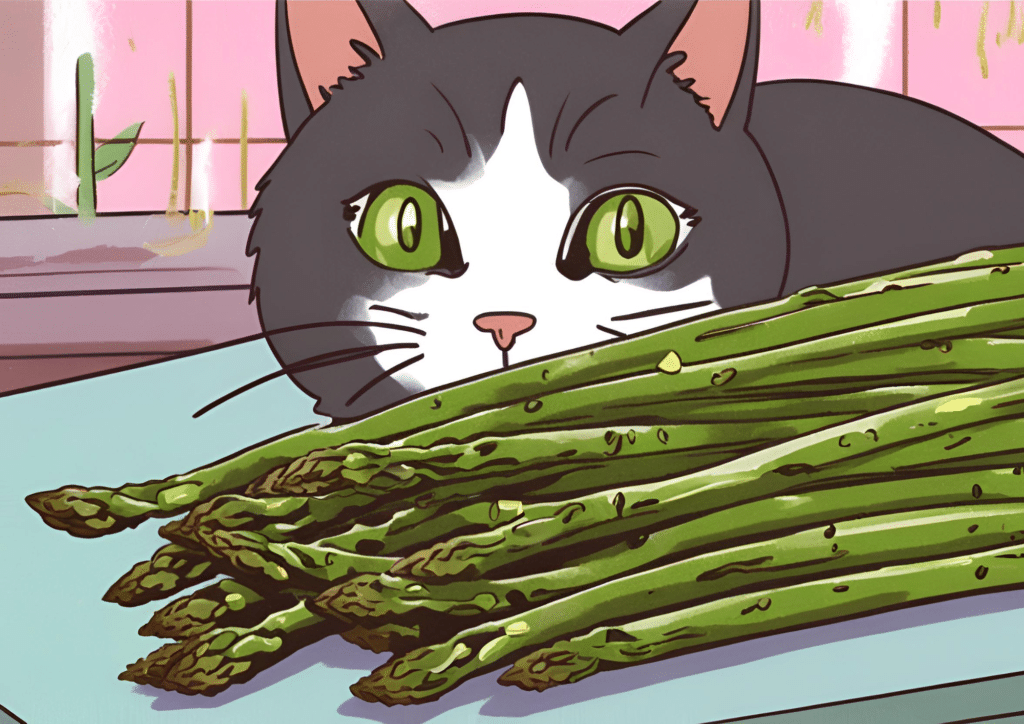
Now that you know the potential benefits asparagus has for your cat, you may want to give them some and see if they like it or not. Before serving this nutritious veggie to your cat, consider the following:
- Cooked or raw, your cat can try asparagus in both ways. Ultimately, cats will most probably have a better experience eating cooked asparagus since that will soften it up, making it easier to bite and overall, more enjoyable to eat.
- Avoid adding any seasoning you would normally use if you intend to give the asparagus to your cat. This can be highly toxic to your cats and should always be avoided. Always give your cat plain and unseasoned vegetables. Especially avoid garlic and onion!
Remember! Asparagus should only be fed as an occasional treat, and should never substitute any of your cat’s daily meals. This will be the case with every other safe vegetable for cats to eat, as none of them are their main source of nutrients,
Final Thoughts
We hope you’ve enjoyed this article and learned how to properly introduce asparagus to your cat if that’s what you desire to do! Luckily, it’s a safe vegetable for most cats, and there are even some potential benefits your furry friend could be getting as a side bonus, all while eating a healthy treat!
Liked this post? Share it on Pinterest: