
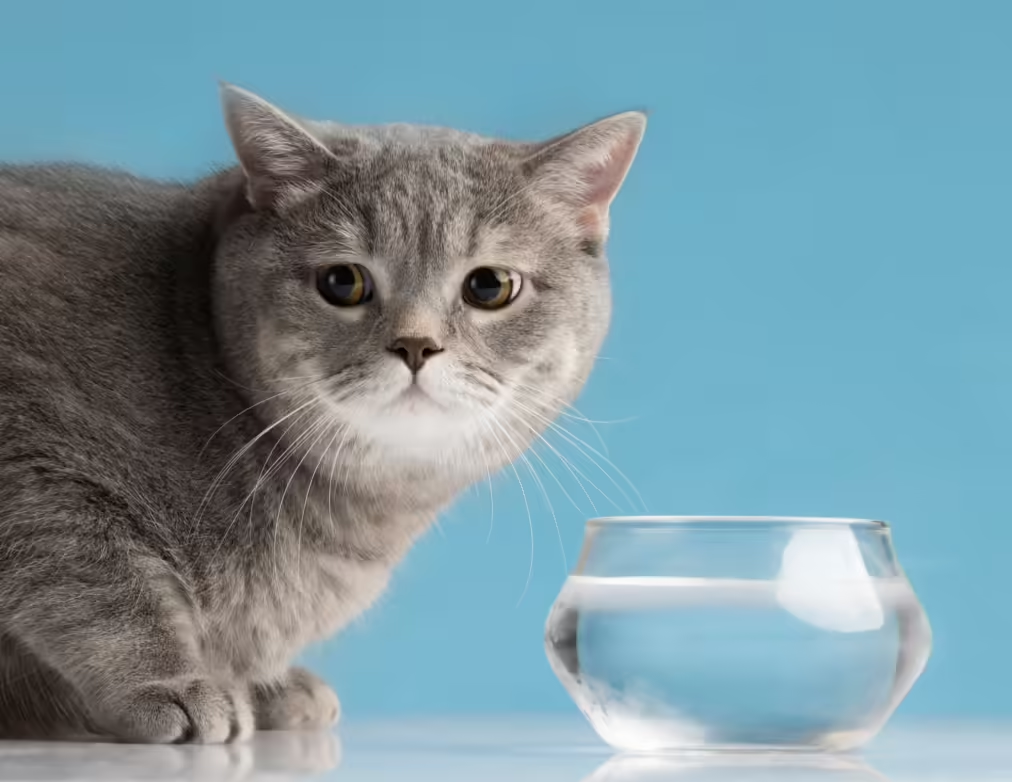
Did you know the average 8.8lbs cat should drink almost a full cup of water daily?
Unfortunately, our feline friends are no fans of drinking water, and they will often be dehydrated without us owners ever knowing if we don’t monitor the situation closely. Dry food-only diets are a big reason behind this issue. For example, my cats prefer running water, so they would tap the bowl to get it moving, and in the process, they spill half of the bowl on the floor. (Yes, I tried with a fountain but it didn’t work for them!) If I wasn’t aware of this I’d think they drink a LOT of water, when it’s not the case at all.
This hassle may lead a lot of cat owners to look for alternatives. Big spoiler here: There’s no replacement for water when we talk about cat hydration. In this way, it’s kind of the same case with us humans. However, cats are more delicate, and some liquids can be toxic to them and should always be avoided.
In this guide, we will analyze all of the available drink options and categorize them into the ones that are OK (in moderation and with certain precautions) and those completely off the table. Helping you take care of your feline friend is our top priority on this blog, so warnings won’t be cut short.
Right off the bat, no drinks on this list should be considered as alternatives to water (even if your cat hates drinking water!). This is why we will also talk about wet food and how it can help cats with a water-drinking aversion to avoid dehydration.
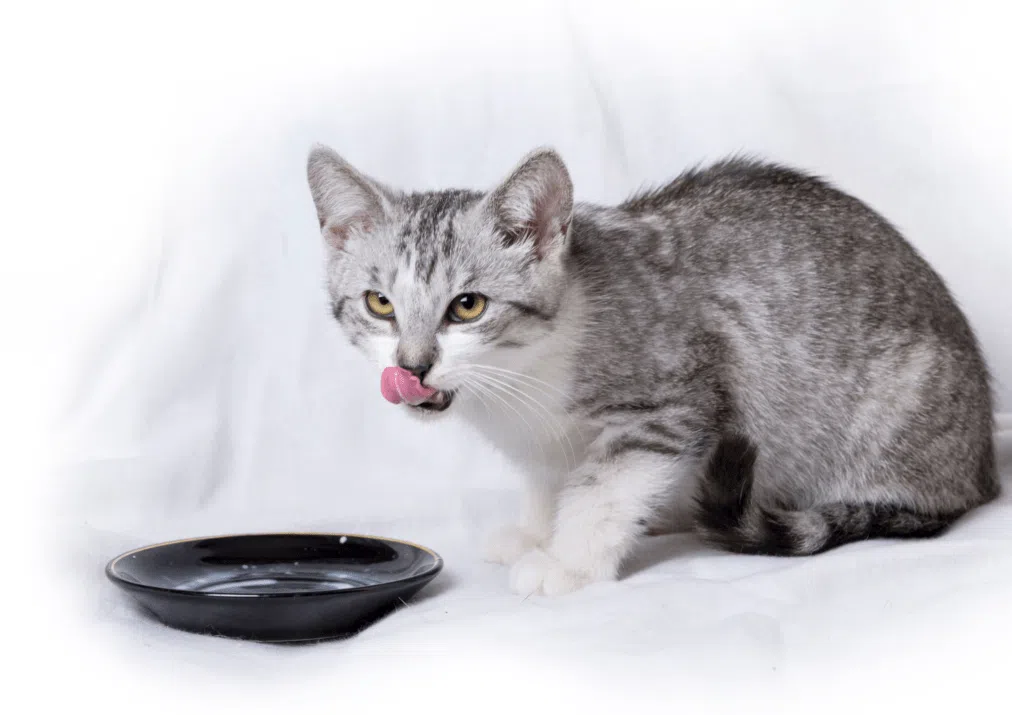
Why It’s Important to Know What Cats Can Drink Besides Water
It’s unfair to judge cats for not meeting their required daily water intake when experts say that 75% of Americans are chronically dehydrated. Humans tend to have various drinks other than water even if it’s not healthy. However, our feline friends can’t just have a soda and get on with their day.
Most of the food we find at the grocery store goes through different processes where ingredients are mixed and added, falling under the description of processed foods. Dinks can go through processing as well.
This practice is very common nowadays, and unfortunately, it makes most foods and drinks detrimental to your health. If it’s bad for you, just imagine how harmful it can be for your feline friend to sip your carbonated drink.
So if you stay away from processed foods your cat should be okay, right? Think again! Not everything that nature has to offer is safe for cats, as we will see on the list.
For example, did you know that most adult cats are lactose intolerant? A lot of people tend to think that cats can drink milk freely like they used to do when they were kittens, when it’s not the case for the majority of them.
What Can Cats Drink Besides Water
A few considerations before the list itself:
- We do not recommend replacing water with any of the drinks mentioned. In some cases, you can compliment, but no other drink should be a replacement, even if it’s considered “safe in small amounts”.
- Considerations will be made based on the average, adult cat. Many cats have allergies or special needs. If this is the case, the responsible thing to do is to get your vet’s approval before giving any liquid mentioned on this list to your cat.
- After the list, there is a section dedicated especially to kittens.
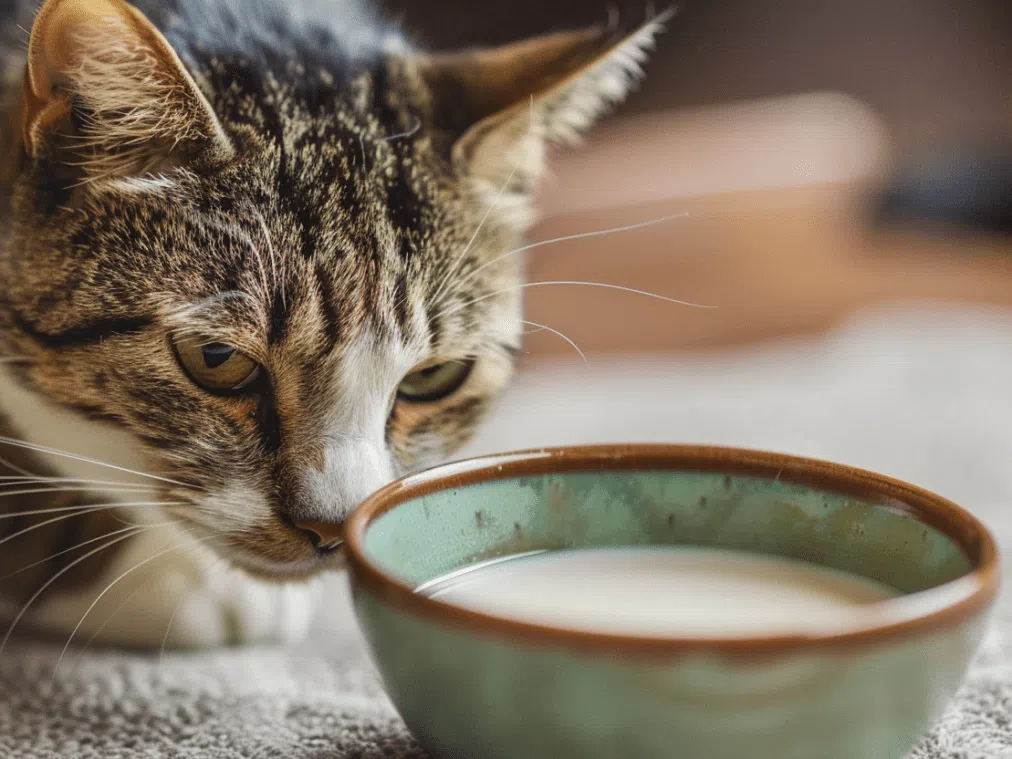
Bone Broth
If prepared correctly, bone broth is safe for cats to drink and it can also offer a good deal of benefits. The most important thing to bear in mind is that any bone broth you prepare specifically for your cats should not include spiced pieces of meat or bone remains. Avoid onion and garlic at all costs since these are common ingredients present in a regular bone broth and are particularly toxic to cats.
Unseasoned bone broth brings many benefits for your cat’s diet:
- Source of Collagen: Among the many vitamins and minerals that bone broth contains, there is a high content of collagen, which supports overall skin health. It is great for aging cats as cats collagen production decreases as they age, and an additional dose of collagen can reduce joint inflammation and pain.
- Rich in Calcium and Phosphorus: These two can help your cat to maintain healthy bones and teeth!
- Low on sodium: commercial pets bone broth has no added sodium nor artificial ingredients as well. Sodium can be bad for your cat if consumed in high amounts, so it´s better to avoid it whenever possible
- Excellent to transition from a full dry food diet to a wet food diet: ultimately, the goal is to give our cats a balanced diet, for that purpose, wet food based diets are preferred over dry food based diets. This way, cats can get the nutrients they need while staying hydrated.
- Cats love it: As part of their regular diet or as a treat, you´ll never find a cat that doesn´t crave this magnificent beverage.
Benefits for you:
- Budget friendly: You don´t necessarily have to buy this from the store. You can do bone broth at home and the cost will decrease significantly. However, even if it´s easy to prepare, it takes a few hours to make it. The choice is yours!
- Easy to serve: There are a few ways to serve bone broth to your cat. Now that summer is here, you can freeze bone broth in silicone molds to have the perfect fresh treat. You can also give it as it is with no further preparation and they will still love it. If you want to, you can integrate it to their regular dry food as well.
Want to prepare it yourself? Check out this easy bone broth for cats recipe!
Electrolyte Solutions
Regarding electrolyte solutions, the first thing that comes to mind is sports drinks. However, there is more to electrolyte-replenishing drinks than these sugary drinks.
- Pedialyte: This is a popular, branded electrolyte solution marketed mostly for use in children. It helps the young ones replenish fluids and electrolytes when or after vomiting or diarrhea. As it contains only a small amount of sugar, it is a great alternative to sports drinks as the latter have more glucose content. For cats, it can be used safely in moderation in cases of gastrointestinal issues and fluid loss usually caused by vomiting and/or diarrhea. Pedialyte is meant to help or prevent dehydration, so it should never work as a replacement of water and its use should be approved by a vet, even if you are sure your cat is suffering from dehydration. If you ever have to give Pedialyte to your cat, go for unflavored formulas and dilute them.
- Electrolyte supplements for cats: Adults usually need to replenish electrolytes too, so other brands offer these types of products apart from Pedialyte’s formula. Some of these electrolyte supplements are specifically meant for cats. However, even if they are safe or meant for cats, the word “supplement” must be taken literally. Therefore, these products should never replace water. These complements are great at providing essential amino acids and much-needed minerals as a side bonus to keeping your feline friend hydrated, ensuring their well-being. Always ask your vet before giving your cat any electrolyte supplements, as your cat could have special needs or it may not be necessary.
- Sports drinks: You shouldn’t give these to your cat as they can contain high amounts of sugar. As we mentioned earlier, there are better alternatives if you are looking to help your cat rehydrate after gastrointestinal issues.
Catnip Tea
On special occasions, you can offer your cat some catnip tea.
You probably know what catnip is! But if you don´t, catnip is a herb from the mint family, the term probably surges from the responses that cats have when interacting with it. Often zoomies inducing on some cats when smelled or eaten, despite having soothing and calming properties in the form of tea. In any case, 99% of cats love catnip, and a good way to offer some to your cat would be in the form of a tea. If you are interested in preparing some check out this catnip tea recipe.
Some of the benefits of catnip for cats are:
- Makes cats happy and relaxed.
- It can encourage movement on less active cats
- Stress-reducing for anxious cats, mostly in unfamiliar settings. (Great before visiting the vet!)
Now your cat can join you at tea time.
Other herbal teas: Unfortunately, there is a lot of misinformation online, as Peter GW Keen says on his tea blog. We found a lot of contradicting information as well. Some blogs suggest chamomile tea can be soothing for cats, while trustworthy organizations such as the ASPCA (American Society for the Prevention of Cruelty to Animals) list all plants toxic to animals, and classifies chamomile as toxic. Peter also warns about essential oils, which many herbal teas contain and can be very dangerous to cats.
Tea often contains caffeine and theobromine, which we will cover later, but are very toxic to cats and any food or liquid containing these two should be kept away from your feline friend.
The truth is, we can´t suggest any other tea than catnip tea, even if herbs are safe. Better safe than sorry!
Milk
Right off the bat, Cow’s milk is out of the equation. Contrary to popular belief, cow’s milk can be detrimental to most cats, since after their first 6-7 weeks of life, cats start becoming lactose intolerant. While this varies a lot from cat to cat, giving them milk as adults is never a good idea.
Here are a few viable options with some special considerations:
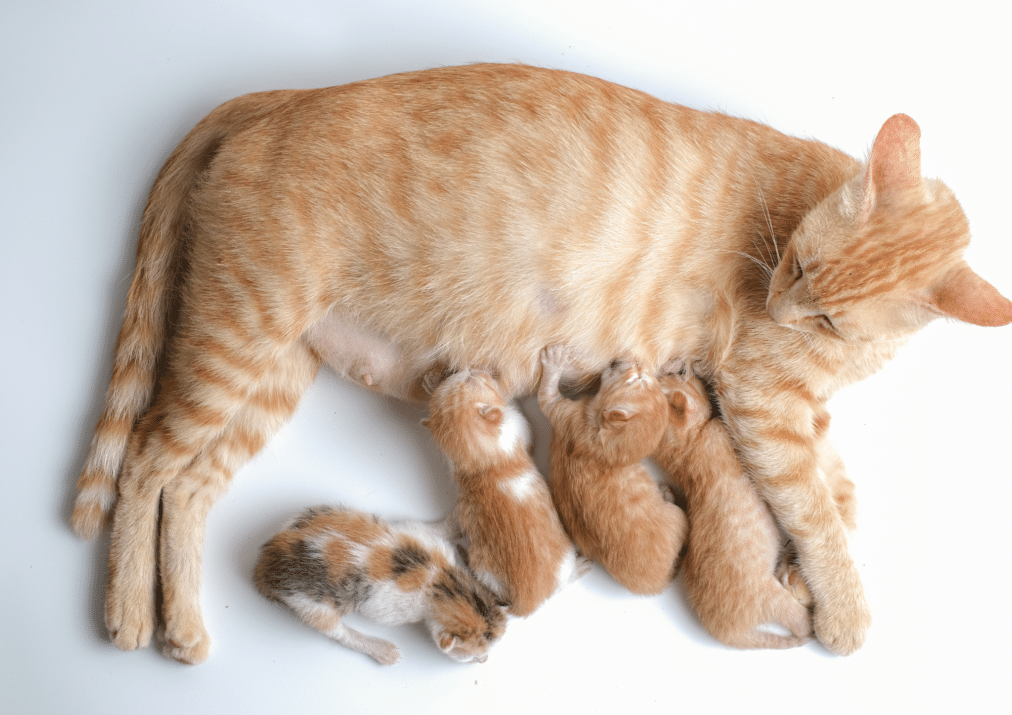
Milk Replacements
If you end up with a newborn kitty by itself, you will probably need some replacement for their mother’s milk. This is critical for their well-being and development and it’s the reason why there exist some commercial milk replacement for kitties. These often come in the form of dissolvable powder and are easy to give to your new friend. After the 6 week period, they can leave it and start consuming water instead.
Goat Milk
Goat milk reduces the downsides of Cow’s milk for cats, in the form of less lactose and less unnecessary fat, since they usually get what they need from their usual dry or wet food. As not all cats are equal in the sense of lactose tolerance, some may have no trouble having a few sips of goat milk. Never force your cat if it’s not interested, though. In the contrary case, keeping it as an occasional treat is the way to go.
Some of the potential benefits of goat milk for cats include:
- Vitamins A and B5
- Calcium
- Phosphorus
- Prebiotics and probiotics
Cat-Specific Milk
Both milk replacement and goat milk can fall into this category. There are some lactose-free products that can do the trick if your cat loves the taste of milk and dairy products, try getting cat-specific milk in specialized stores.
Oat Milk
Oat milk (See full article) is a common alternative to dairy among humans. However, it has no nutritional benefits for cats, and it is high in carbohydrates, which cats don’t need much of. It can work as an occasional treat, 1-2 tablespoons now and then is a great way to administer it.
Coconut Water
Coconut water can be one of the options with fewer downsides when it comes to what can cats drink besides water.
Coconut water is not toxic to cats, and comes with a healthy list of potential benefits to support its status as an occasional treat:
- Coconut water contains vitamins, minerals, and antioxidants. Including Potassium, Vitamin C, magnesium, and sodium.
- Helps their immune system
- They love its taste!
- It can give a small hydration boost
Be aware! While coconut water is safe by itself, fresh coconut milk and its flesh contain oils that can cause gastrointestinal issues to your cat, leading to vomiting and/or diarrhea. So keep it simple and secure!
RELATED: Can Cats Drink Coconut Water?
Drinks To Avoid

Unfortunately, the list of drinks to avoid is very long. Cats are just built differently, and many of the drinks we have are out of the question if we care about their well-being.
- Alcohol: This one is pretty obvious, alcohol is extremely toxic to cats. Fortunately, it’s hard that they ever feel inclined to taste it, but if they do, know that just one teaspoon is enough for a cat to suffer alcohol poisoning.
- Caffeine: We mentioned when we talked about tea, that caffeine is toxic to cats, and a lot of beverages we consume daily have it: coffee. tea, soda, energy drinks. For most cats, a sip is not enough to cause serious toxicity but it will never be good, so keep your cat away from your caffeinated drinks.
- Sugary drinks: Cats can’t taste sweetness, therefore, it’s pointless to give them anything that contains sugar. This can include any flavored water, soda, and high in sugar fruit juices. These can seem harmless, but even natural juices have high amounts of sugar. A sip of homemade, 100% natural apple juice is ok, but ONLY if your cat loves it. Avoid giving them unnecessary sugar.
- Dairy Milk: Your cat will be healthier if you make them stay out of lactose. Cats have a hard time digesting regular milk properly. As we discussed earlier, there are a few alternatives to dairy milk if your cat loves the taste, such as goat milk, albeit given in moderation.
- Oils: Most oils are toxic to cats, especially vegetable oil. if you give tuna to your cat, make sure it’s not preserved in vegetable or olive oils.
- Syrups: These are high in glucose, which can be very harmful to cats, especially in syrups where the sweetness is increased. Avoid maple, agave, and any other syrups.
- Mate: It may seem harmless, but yerba mate is toxic to cats. It contains theobromine and caffeine. So this popular infusion should be avoided as well. (I can tell from personal experience that some cats can be attracted to it, so don’t leave your mate laying around)
How to Help your Cat to Stay Hydrated
Judging by all of our warnings, you may feel there are no alternatives. Luckily, it’s easy to make your cat drink more water. The secret is to “trick” them into liking it.
Choosing The Right Bowl
There are three popular materials which a cat’s water bowl can be made of:
- Metal
- Plastic
- Ceramic
Plastic can easily get contaminated, even if you wash it daily. Metal and ceramic and best suited on that regard. This may come to your cat’s preference. In my case, ceramic has been amazing and they fortunately have no issues drinking water since i have to refill it daily.
A Royal Canin’s study concluded that small bowls are better than big ones since they allow cats to better feel its size with their whiskers. This is important if you notice your cat sneezes too often while drinking water.
Our final recommendation is a small ceramic bowl. I invite you to try it for yourself and tell us how it went for you 🙂
Water Fountains
If steady water is not doing the trick, maybe a water fountain is the solution. Some cats don’t like to have water straight from the bowl because they think it’s not fresh, even if you just changed it and the bowl is crystal clean. This could be the reason your cat drinks water from the faucet or lavatory. Some cats paw the water to get it moving before drinking, too.
A water fountain will keep water flowing and make your cat think its fresh. Therefore, they are usually more inclined to drinking water this way.
Tuna Juice and Wet Food: The Perfect Allies to Fight Picky Cats Dehydration
Have you ever opened a can of tuna and had your cat going crazy next to you? Next time you do it, you can try to mix a bit of that tuna with water. It often makes for an enticing drink for cats that won’t have regular water. You can also find cans in pet supply stores that have this covered for you in advance and are 100% guaranteed to be enjoyed by your feline friend.
If your cat’s diet is limited to dry food, consider incorporating wet food into their meals. While regular dry food is generally beneficial, it often falls short in providing certain nutrients that your cat can readily obtain from wet food. Most importantly, a combination of both would ensure your feline companion stays well-hydrated.
The best part is that cats love wet food! You can give them some as a treat now and then, or straight up compliment their diet with a suitable option for your cat. Always consult your vet for the best, personalized advice.
Keep it simple with Kitties

Newborns should only drink their mother’s milk. If this is not possible, use milk replacements, which you can find at pet supply stores. You should continue feeding your cat only milk until he is six weeks old. At that time, he can start to drink water.
Conclusions
We hope that this guide helped you know what drinks you can share with your feline friend, and which ones you should keep away from them. Understanding the risks of ingesting toxic foods and drinks is crucial when it comes to keeping our cats healthy.
If you would like to keep learning about feline nutrition, we invite you to read our guide on what vegetables can cats eat.