Are you tired of your home smelling like litter? I can relate to that, especially as a cat parent living in a small space, but I found the definitive solution with air purifiers.
Air purifiers are safe for cats, and can definitely help us with that and more!
These devices can solve a lot of issues, of which we may even not be aware of. For instance, if you know someone who’s allergic to cats, they might be no more after getting an air purifier, as it gets rid of many invisible allergens.
Before the recommendations, let’s see what to look for in an air purifier for our purpose.
This post contains affiliate links. As an Amazon Associate, I may earn commissions from qualifying purchases.
It’s important to clarify what we looked for and prioritized when selecting them. There are many air purifiers out there, but you’re here because you want the best one for a specific need.
If you want to get rid of cat litter odor and harmful allergens, these are what the ideal air purifier should have:
- HEPA Filter: HEPA stands for “high-efficiency particulate air”. It’s a popular type of filter that serves as a captor of small particles such as dust, dander, and bacteria. As most air pollutants are removed thanks to this filter, air quality can improve significantly if your air purifier has it. It’s quite standard, so it won’t be hard to find air purifiers with a HEPA filter.
- Activated Carbon Filter: This filter is essential for our purposes. An activated carbon filter usually acts as the last barrier in the set of filters an air purifier features, and functions as the eradicator of odors and volatile organic compounds (VOCs) such as those that originate from cat litter. By trapping those molecules, potent smells are significantly reduced.
- Noise Level: Air purifiers run for long hours, so a low noise level while turned on tends to be a desired feature for many buyers. Quick tip: You can read any air purifier’s features and look out for the noise level in decibels, which will help you compare.
- Room Coverage: Air purifiers come in all shapes and sizes. Some are intended to be light and portable, while others are bigger and meant to be kept in the same room for the most part. Consider in which room you’ll be placing the air purifier, this will be ideally in the same room as your cat’s litter box.
For maximum odor reduction: Consider changing to Tofu cat litter.
Top Air Purifiers for Cat Litter Smell
Quick note: All air purifiers below have a HEPA filter and an Activated Carbon filter as well, as we believe they are both mandatory for the purpose of your search.
LEVOIT Air Purifier
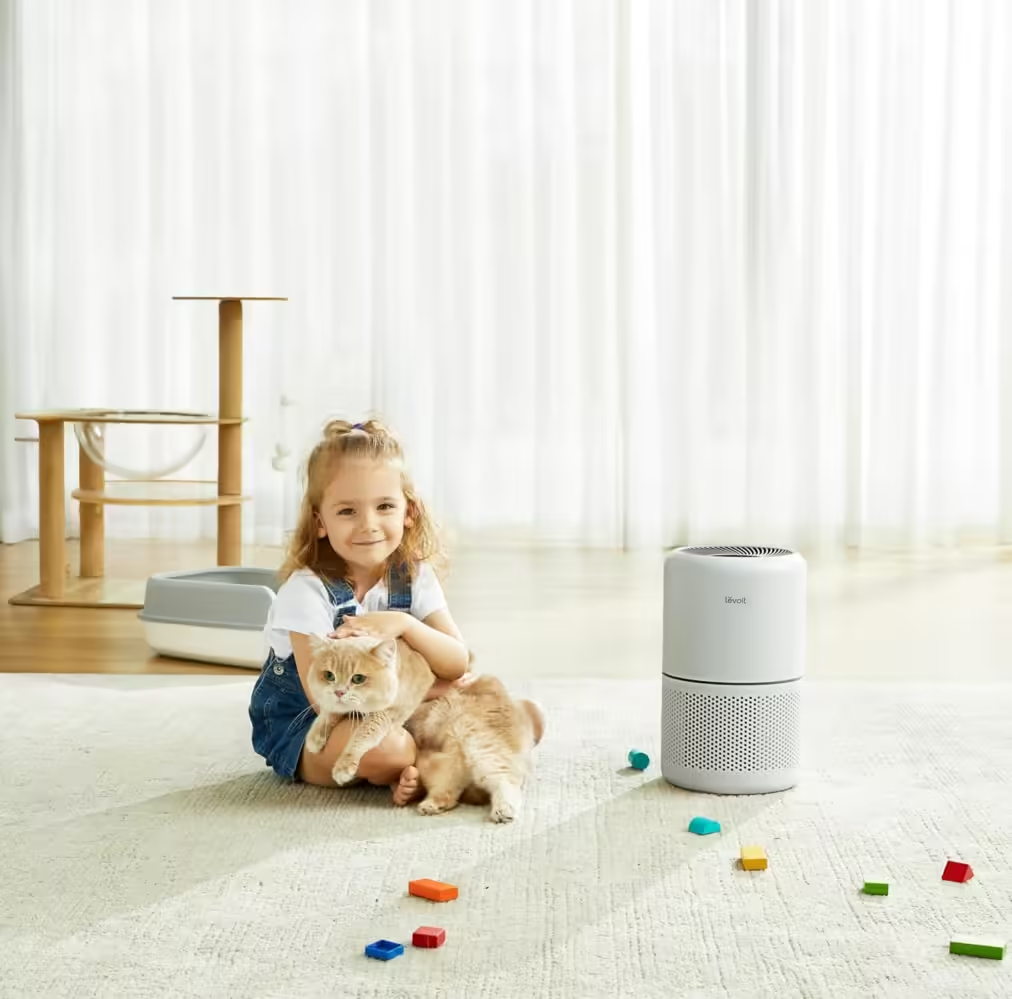
LEVOIT’s proposal is similar to the one of AIRROMI’s Air Purifier. What’s in favor of the LEVOIT air purifier is how popular it is, with extremely good reviews (4.7 stars from over 127.991 ratings) a fact that works as a guarantee by itself.
While being a small and portable air purifier, it can cover a slightly bigger area. A great feature is the sleep mode, which allows it to stay on at night at a near-silent level.
Features:
- Compact
- Covers Up to 1095 ft²
- 45W long-life, high-torque motor
- Low noise level (24 dB), especially when considering motor specs.
- You can choose a Pet Allergy Filter Replacement
WISESKY Air Purifier
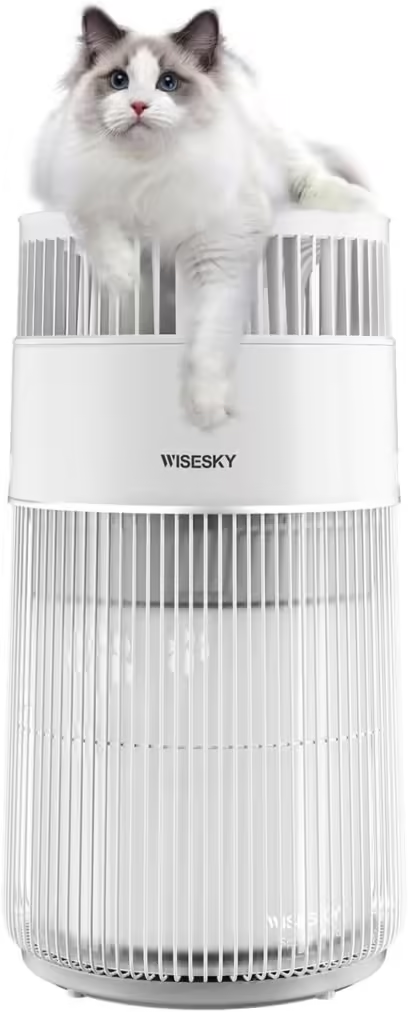
Moving to bigger and better things, if you want an air purifier specifically designed to tackle all of the issues we talked about (cat pee odor, allergens, dander) then this is the one.
The WISESKY Air Purifier is a big, standing air purifier with a surprisingly low noise level similar to smaller competitors. It can purify medium and large rooms and goes the extra mile with a 5-stage filtration process.
What makes this air purifier the best for our feline friends? It adsorbs 99.98% of particles, and this includes pet hair, something small air purifiers have a hard time accomplishing. It offers a wide range of speeds, sleep, light-off mode, quiet mode, and many other amazing features. You can check the video below to know all of them!
One great feature is that the filter is visible and transparent, This allows you to easily determine when to clean and replace them.
Features:
- Specifically designed to combat cat pee smell. dander and litter box dust.
- Covers Up to 1644ft²
- Pre-Filter for hair-grabbing
- 360° air intake
- 24V Low Voltage
- Low noise level (24 dB), especially when considering motor specs.
- Monitor air quality in real-time with 3 color display
- FCC Certified, CARB Certified, EPA Certified
AIRROMI Air Purifier
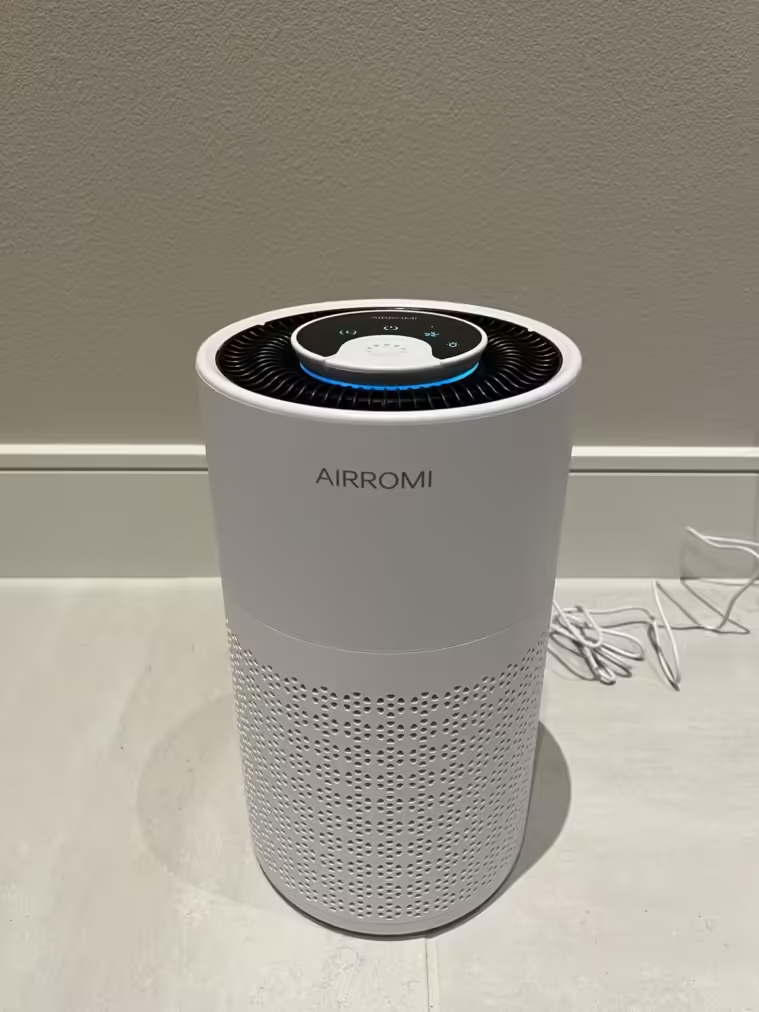
The AIRROMI Air Purifier is recommended for bedroom use. It will work best in small to medium-sized rooms. The design is quite neutral but pleasant. Great if you have the litter box in the bathroom or in a separate small room.
It features an aromatherapy pad where you can pour essential oils and make the ambient smell amazing! Be aware, that cats don’t really enjoy smells the way we do, and using these next to the litter box can cause them stress.
Features:
- Lightweight ( 3.7 pounds) and compact
- Covers Up to 990 Ft²
- 360° air intake for maximum air entrance
- 18W energy-saving long-life motor
- Very quiet, low noise level (23 dB)
How Cat Litter Affects Indoor Air Quality
Here are some of the most important issues cat litter presents that affect air quality:
- Odor Control: As you probably know, cat litter doesn’t smell like flowers. The odor of urine and feces that comes from the litter box can clog your nose (if you don’t scoop it daily, or more if you have more than one cat like me). Without proper ventilation or an air purifier, these odors tend to linger around your home.
- Dust and Particles: This is particularly common with clay-based cat litter. These litters come and/or generate dust that gets released when your cat uses the litter box and it can be harmful to you and your cat, as it can be easily inhaled. Tofu cat litter is dust-free, and it’s one of the main reasons why we recommend it over other clumping cat litter options such as clay.
- Ammonia Levels: Cat urine contains a highly irritating gas known as ammonia, which can build up in the litter box over time and float around it. High levels of this gas can irritate your eyes, nose, and throat and cause respiratory issues. If you suffer from any of this or want to prevent it, an air purifier can help deal with it.
- Bacterial Growth: The litter box can easily become a host of bacteria and many other microorganisms. When your cat uses the litter box, you scoop it or in any way these get disturbed, the bacteria can become airborne and directly impact air quality and odor levels. This is why the HEPA filter (which we will cover in a second) is so important in air purifiers.
- Allergen Control: Like humans and other pets, cats can shed dander. These are microscopic-sized skin cells known for being a common allergen. An air purifier would help in reducing the levels of these allergens, and its effect is bigger when combined with litter dust. If you or a family member is allergic to cats, this is likely the reason. An air purifier may allow you to hug your kitty without consequences, lovely!
Tips for Maintaining Air Purifiers
- Regularly Replace Filters: For proper functionality, regular filter replacement is mandatory. This will vary depending on what air purifier you got, and how much time it’s turned on. As a rough estimate, HEPA and activated carbon filters should be swapped in between 6-12 months. Replacing the filters regularly will also prolong your air purifier life.
- Keep the Air Intake and Outlet Clean: With use, air intakes and outlets can accumulate dust and debris that should be removed to avoid reduced efficiency of your air purifier. For this, you can use a vacuum with a brush attachment, also a soft cloth can suffice.
- Keeping litter boxes clean: Not regularly cleaning the litter box because you now have an air purifier is lazy, don’t be lazy! This will only make your air purifier work twice as it should. Avoid this to prolong the filter and air purifier’s use and life.
Conclusion
To sum up, we learned air purifiers are almost essential if you have kitties and want to get rid of unpleasant odors coming from the litter box, allergies, and other invisible air polluters. We went over why HEPA and activated carbon filters are so important when it comes to getting rid of these issues with an air purifier.
Next, we provided a few recommendations based on what is considered important to deal with the specific issues of odors, dust, and allergens. Finally, we issued a few recommendations on how to prolong the utility of your air purifier.
Have we missed a great recommendation? Do you have your air purifier already? Let other readers know about your experience!