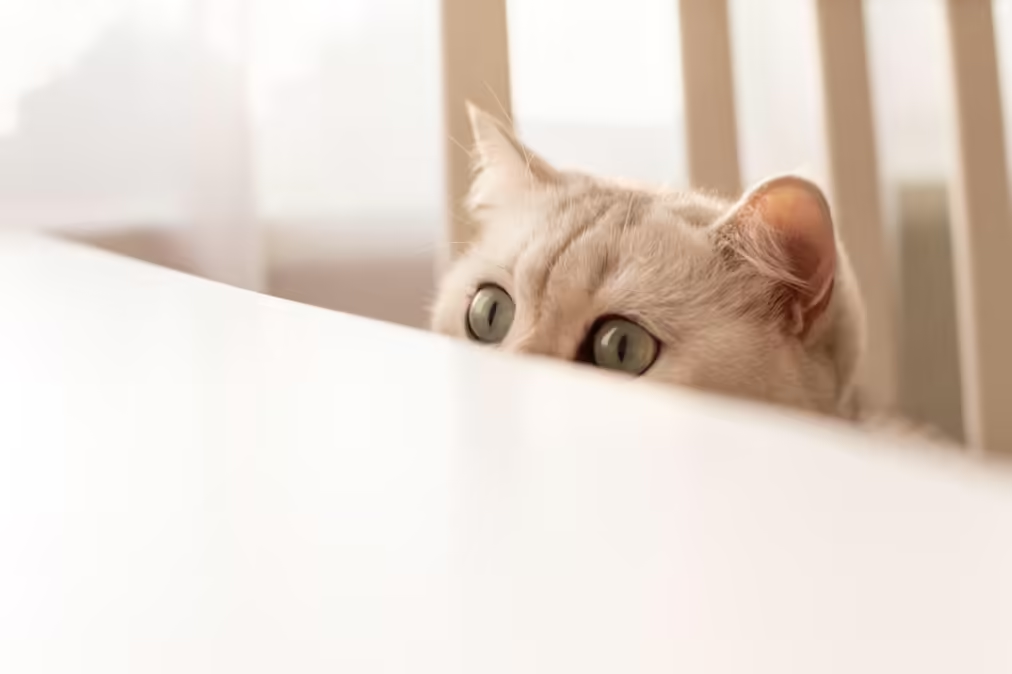
SUMMARY: Are your cats ears hot? It’s usually nothing to worry about, cats have a higher average body temperature than humans and can self-regulate it. Hot weather is a common cause as well. In some cases however, it could be an indicative of ear infection, allergies, fever or even hyperthyroidism. Keep reading to get an In-depth explanation of each possible reason
Cat’s ears work like thermometers.
Are your cat’s ears hot? this is usually normal and nothing to worry about.
In some cases however, it may prove necessary to take a closer look since warm cat ears can be a symptom of illness, among other possible health issues.
This article compiles 9 reasons backed by veterinarians as to why cats have hot ears, and which ones are a motive enough to pay a visit to your trusted vet.
1. No Apparent Reason
This one’s first since it’s the most likely one! If your cat has warm ears, it’s probably nothing. Cats’ average body temperature ranges between 100.5˚F-102.5˚F (38.1°C – 39.2°C), which sounds very high compared to human standards.
Cats will usually have warm ears by default.
If you feel your cat’s ear and think it’s warmer than usual, remember they self-regulate their body temperature, so it’s probably a sign of that happening. You can check up later and see if anything changes in case you are worried.
A cat’s warm ears can also be the product of a long nap, so if your cat has been asleep recently there you have an explanation.
2. Hot Weather
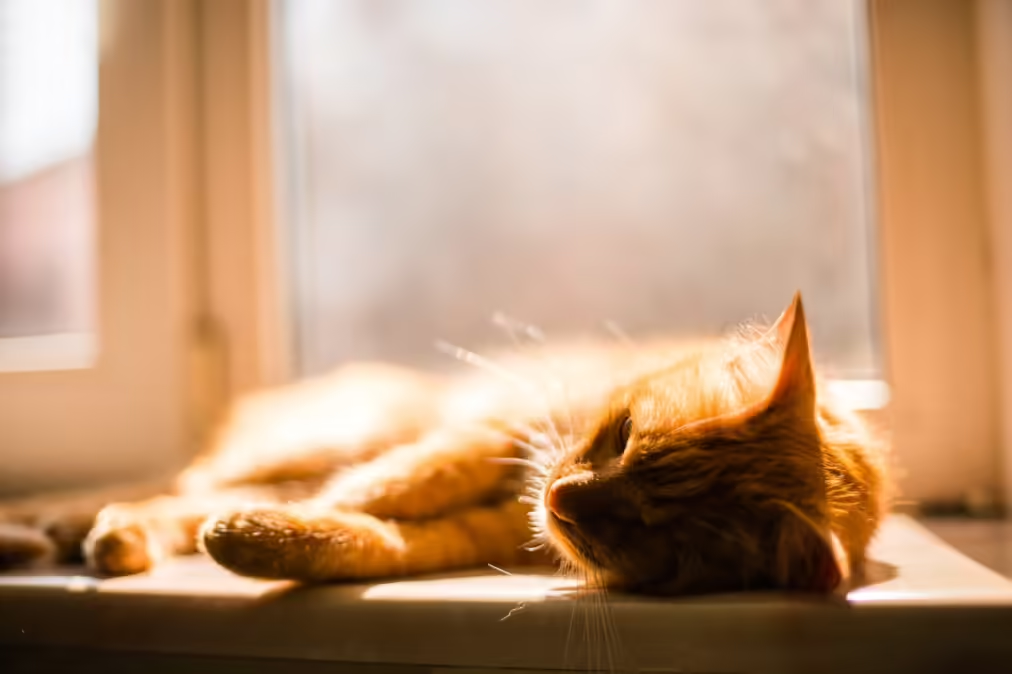
Has your feline friend been outside recently? Basking in sunlight can make them feel as hot as a barbecue to the touch. This can also happen If they spend too much time sitting close to the window. Prolonged sun exposure can eventually lead to warmer ears.
Although cats have a lower risk than dogs of suffering a heatstroke, it’s not zero. Albeit unlikely, watch out for sun-stroke signals, especially if your cat:
- Has thick fur: As this acts like an extra layer of protection
- Is overweight: Same as above
- Is flat-faced: Persian cats for example have a hard time breathing, therefore panting is not as effective to lower body temp in case they need to do so.
- Has any issues breathing or with their footpads: These are the two methods cat use to cool down, having difficulties with either of those increases the risk of suffering a heatstroke
Even if your cat stays indoors and away from windows, you have to be mindful of room temperature. In winter, you would probably feel warm with the AC turned on. Some cats like it and try to stay under it, but it is as dangerous as sunlight when it comes to heatstroke risk, not to mention if you have radiant underfloor heating as well.
Most times, however, a bit of sun exposure is nothing to worry about. Just be mindful of any heatstroke signs.
3. Temperature Spike After Some Playtime
Have you and your feline friend just ended a playtime session? Just like it happens to us humans, cats get increased body temperature when engaging on physical activity.
You can expect your cat to have warm ears after some recreation time, and it’s nothing to worry about. Don’t overstimulate your cat, though! I once played so much with one of my cats that he lay on the floor and started panting like a dog (don’t try this). I didn’t feel his ears back then, but I’m sure they were hot.
So luckily there is no need to suspend the playtime sessions if your cat’s ears are warm. They are very beneficial to your cat’s health so keeping them active is what a caring cat mom or dad would do.
4. Ear Infection
Unfortunately, hot ears in cats can also be a symptom of infection in the same area. Although indoor cats are less likely to develop these infections, it can happen if something ends up inside your cat’s ear; from any foreign object to ear mites, be on the lookout for strange objects inside your cat’s ear.
Other symptoms of an ear infection can be:
- Fever
- Excessive scratching or rubbing ears
- Pungent smell
- Waxy build-up
Ear infections can cause imbalance and the ability to self-regulate body temperature. If these symptoms are present it is recommended to visit a vet soon in order to evaluate further treatment.
It’s not recommended to pull from at-home remedies, firstly because there are no viable remedies one can make at home to cure ear infections, and secondly, anything you try can worsen your cat’s condition.
5. Allergies
Allergies are one of the most common medical conditions in cats, and they usually come from seasonal irritants, most commonly pollen, insects, and grass.
It can also be due to dust or even food. So if your cat is suffering from allergies for the first time, it could be that they are allergic to a particular plant that releases its pollen only during certain seasons in the year.
Hot ears are just one of the symptoms a cat can suffer from if they have allergies. Other symptoms include diarrhea, sneezing, wheezing, bloating, and excessive licking/grooming.
It’s recommended to at least speak to your vet in case your cat is suffering from allergies since this is very uncomfortable for them, despite not being so dangerous as other reasons listed here.
6. Fever
Warm ears are one of the first signs of fever a cat can show, you probably understand why as we shared the important role they plan on cooling down a cat’s body temperature.
According to the Veterinary Medical Center of St. Lucie County, fever symptoms are:
- Warm Ears
- Dry Nose
- Lethargy
- Loss of apetite
- Glassy eyes
- Body temperature higher than 103.5 degrees Fahrenheit (39.7 Celsius)
- Dehydration
Recognizing the symptoms is crucial to determining if your cat is getting sick and needs a visit to the vet or how to respond in an emergency. If your cat has warm ears, it doesn’t necessarily mean they have a fever; first, rule out any of the previously mentioned reasons.
7. Medication Side Effects
Have you recently given your cat a pill? Some medications can increase your cat’s body temperature as a side effect. It’s important that whenever you have to give medicine to your cat, you ask your veterinary about the potential side effects in order to prevent having a hard time deciphering what’s happening to your feline friend.
Monitoring your cat when starting to take new medication is crucial. Studies show cats that were given some type of opioids alone or in conjunction with other anesthetic drugs can cause post-anesthetic hyperthermia.
8. Hyperthyroidism
Another reason for hot ears in cats can be hyperthyroidism. While this is an unlikely case, it deserves attention due to its severity. According to Thyro-Cat, Hyperthyroidism in cats is caused by excessive production of circulating thyroid hormones.
it’s mainly present in older cats, especially female ones. Siamese and Himalayan cats are less likely to be affected by hyperthyroidism. The good news is that it’s very treatable.
Increased body temperature is just one of the symptoms, which one can pick up by sensing a cat’s hot ears. other symptoms of hyperthyroidism in cats are:
- Enlarged, palpable thyroid gland
- High blood pressure
- Increased appetite
- Increased heart rate, thirst and urination
- Poor appearance
- Vomiting
- Weight loss
You can find more information on these here
You can also find treatment options here
9. Stress And Anxiety
Stressed cats can suffer from increased body temperature as well, as fever often spikes in stressed cats.
You can easily detect if your cat is stressed due to changes on its behavior, those include:
- Avoiding situations or people more than usual.
- Hiding away for long periods of time
- Spraying at home
- Increased vigilance/state of awareness
- Irritability or agitation
- Increased vocalization
- Aggressive behavior towards people or other pets
- Excessive grooming
- Not wanting to go outside anymore
Stressed cats are visibly tense and show dilated pupils, among other evident body language signs. Stress can also manifest through health-related issues, such as diarrhea or digestive problems.
Many situations can cause stress to a cat, for example moving house, a new pet, a new baby and of course, a visit to the vet, are among the most common stress factors for cats.
Conclusion
To sum up, There is a big chance that your cat is just fine! And fortunately, now you know when to take your furry friend to the vet.
By this point, you probably know the reason why your cat has warm ears as well. Plus, you’ve learned which other symptoms can pair with hot ears in cats in order to detect possible illnesses.
Has your cat ever had very hot ears? Let other readers know about your experience with this common issue.